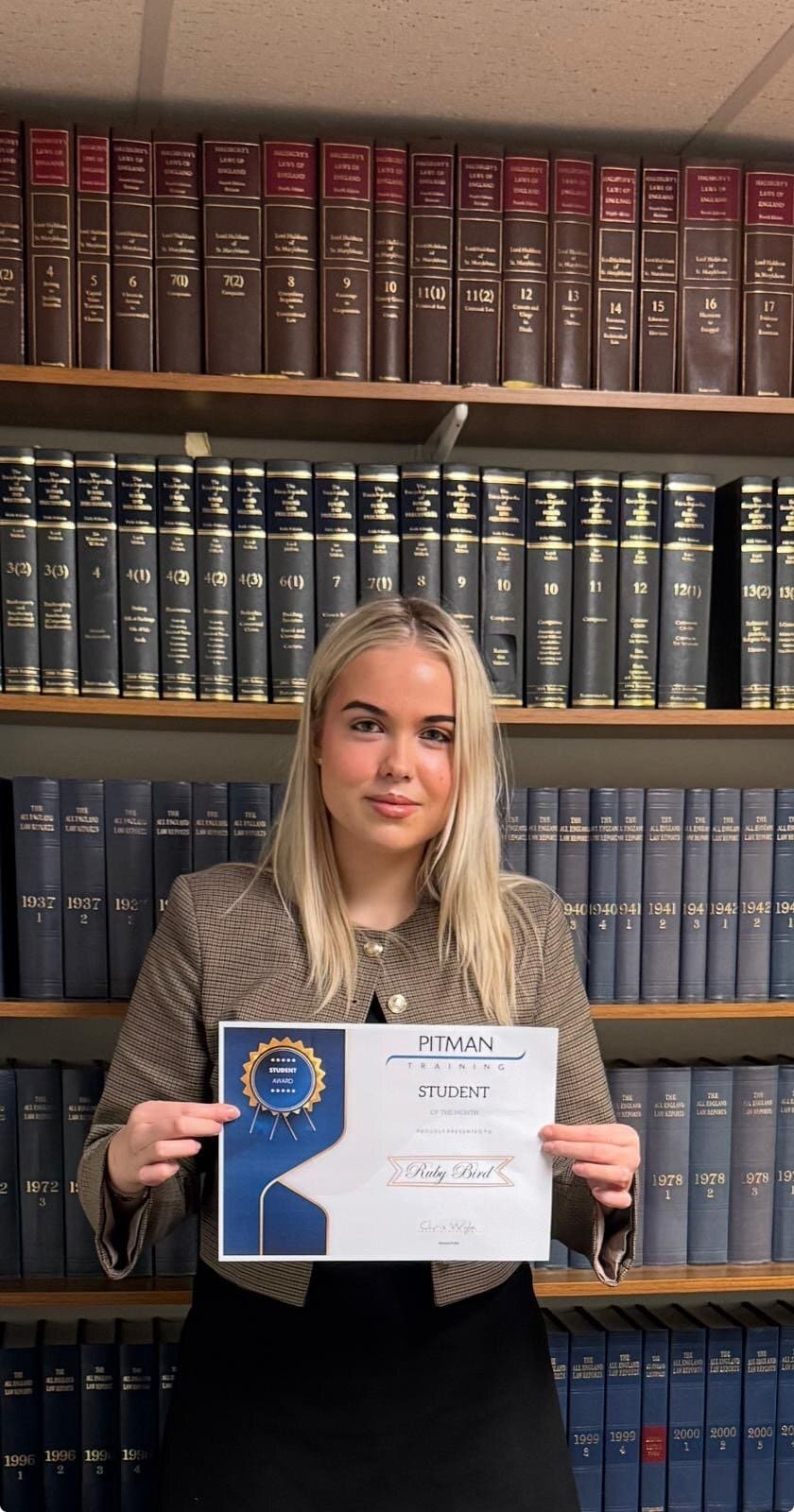
Congratulations to Ruby Bird for being awarded Student of the Month by Pitmans

Ruby joined Adams Harrison in October 2025, in the Haverhill office, as a trainee legal secretary. She is studying with Pitmans Cambridge for the CILEX Legal Secretarial Diploma. The partners were delighted to hear that Ruby was awarded Student of the Month this month by Pitmans in recognition of her hard work and excellent results so far.

Unmarried Partners & Intestacy in England and Wales: What You Need to Know

For the millions of cohabiting couples in England and Wales, the assumption that a surviving partner will “automatically inherit” is not just risky — it is legally incorrect. Despite the rise of long‑term cohabitation, the law has not kept pace with modern family structures, and the rules of intestacy (which apply where one passes away without a valid Will) still exclude unmarried partners entirely.

This article explains how the law works, why cohabiting couples are particularly vulnerable, and what steps can be taken to avoid serious financial and personal consequences.

  1. The Myth of the “Common Law Partner”

A significant number of people still believe that living together for a certain number of years creates rights similar to marriage. It doesn’t. In England and Wales, “common law marriage” has no legal recognition and unmarried partners receive nothing under intestacy rules, even if you have lived together for decades, raised children, or own a home together, you are treated as legal strangers under intestacy law.

We are not encouraging you to have a civil union or marry your partner if you do not wish to, we instead wish merely to highlight what steps can be taken so that your testamentary wishes reflect your current familial circumstances.

  1. How the Intestacy Rules Work

When someone dies without a Will, their estate follows a strict hierarchy governed by statute The law does not consider personal relationships, financial dependence, or emotional ties at all.

The estate passes in the following order:
Spouse or civil partner → children → parents → siblings → extended family → the Crown. Unmarried partners do not appear anywhere on this list.

Although one may deem that a Will is not necessary where they are married and intend to leave everything to their partner and then to their children, steps should still be taken to produce a Will to reflect these wishes – this will be covered in more detail in a later blog post.

This means that if an unmarried person (which may include those couples who have married via religious ceremonies only) dies intestate:

  • Their partner inherits nothing owned solely by the deceased — not the home, not savings, not personal possessions.
  • Children, parents, or even distant relatives may inherit instead, irrespective of how close the deceased was with these relatives.
  • If no relatives exist, everything passes to the Crown.
  1. Financial Hardship & Emotional Impact

The consequences can be severe and immediate. Situations frequently include:

  • Loss of the family home
  • No access to savings or pensions
  • Eviction by legal beneficiaries
  • Costly legal claims to secure any support

Many unmarried partners only discover this legal gap after suffering a bereavement, compounding an already devastating situation. By taking action now and drafting a Will, couples will have taken the steps to safeguard themselves and each other in bereavement.

Conclusion

Unmarried partners in England and Wales have no rights under the rules of intestacy, regardless of how long they have lived together or how intertwined their lives may be. Without a valid Will, surviving partners may face losing their home, assets, or financial security.

The solution is simple but essential: make a Will, review ownership structures, and ensure your wishes are documented. It is the only way to protect the person you share your life with.

If you wish to create a Will and would like our assistance in doing so, you are welcome to contacting one of our three offices whose details are below:

  • Saffron Walden: 01799 523 441
  • Sawston: 01223 832 939
  • Haverhill: 01440 702 485

Child Welfare First: The Repeal of the Presumption of Parental Involvement

Did you know? Contact is no longer treated as a parental right. Courts must now assess whether contact is safe and, in the child’s, best interests.

On 22 October 2025, the Government announced the planned repeal of the presumption of parental involvement with their children under section 1(2A) of the Children Act 1989. Since 2014, courts have been required to presume that involvement of both parents in a child’s life would further the child’s welfare. That is now changing.

The Ministry of Justice’s Review found that this presumption was contributing to a “pro-contact culture,” with unsupervised contact remaining the most common outcome even in cases involving domestic abuse. This reform means:

  • Contact will be assessed on evidence, not assumptions
  • Allegations of harm and domestic abuse will be examined carefully
  • Contact may be supervised, indirect (letters or telephone calls), or refused altogether, where necessary
  • Each case will be decided using the welfare checklist
  • Parental responsibility remains and all parents still have the right to apply for a Child Arrangements Order whether they have Parental Responsibility or not.


This does not mean contact will be refused In many families, courts will still conclude that children benefit from a relationship with both parents. But the child’s safety and wellbeing will always come first.

How can our Family Law team help? We advise parents and families on child arrangements, safeguarding concerns, domestic abuse cases, and applications for child arrangements orders. If any of the issues raised in this blog affect you or your family, contact us for a confidential initial conversation.

This blog is intended as a general overview and does not constitute legal advice. Please contact Family department at Adams Harrison for advice on how to navigate your divorce, children and finances

Written Statements of Employment Particulars: what you need to know

Employers are legally required to provide employees and workers with a written statement of particulars of Employment. This document sets out the key terms and conditions of Employment and is often referred to as a Section 1 Statement.

Although some contractual terms can be agreed verbally or implied through conduct, the law requires certain information to be provided in writing. If there is no separate written contract, a Section 1 Statement will be persuasive evidence as to the terms of the contract between the parties.

When must the statement be provided?

For those starting work on or after 6 April 2020, there is no minimum service requirement for an employee or worker to be given a Section 1 Statement, and it must be provided no later than the beginning of the Employment. Some particulars may be contained in a reasonably accessible document that the Section 1 Statement refers to, and some particulars may be given in instalments but no later than two months after the start of the Employment.

What information must be included?

The Employment Rights Act 1996 sets out a prescribed list of particulars that must be included. In broad terms, the written statement must cover:

  • The identity of the employer and employee
  • The employee’s start date and any earlier service counting towards continuity
  • Job title or a description of the role
  • Place of work
  • Pay and benefits
  • Hours and working patterns
  • Holiday entitlement and other paid leave
  • Sickness and incapacity arrangements
  • Notice and termination provisions
  • Training requirements
  • Disciplinary and grievance procedures
  • Pension arrangements
  • Data protection information
  • Details of any collective agreements affecting employment

What happens if an employer does not comply?

An employee or worker may make a complaint to an Employment Tribunal where an employer fails to provide an accurate Section 1 Statement. The Tribunal will determine what particulars ought to have been included or referred to in the statement. Where an employee or worker also has a successful substantive claim in the Employment Tribunal, they may claim compensation in respect of the failure to provide particulars. The award is likely to be between two to four weeks’ pay.

For advice and representation on all your employment law needs please contact us.

  • Saffron Walden: 01799 523 441
  • Haverhill: 01440 702 485
  • Sawston: 01223 832 939

You can also visit our website and get in touch via our Enquiries Form

Why should you update your Will regularly?

A Will is not something you can simply set aside and forget. As life evolves, your Will should evolve with it. It is good practice to review your Will every 3-5 years or sooner if you experience a significant life change such as:

  • Marriage or divorce
  • The arrival of children or grandchildren
  • Buying or selling property
  • Notable changes in your financial situation
  • Changes to your chosen executors
  • Changes to guardians for children
  • The death of someone named in your Will

If your Will is not kept up to date, it may no longer reflect your true wishes. This can create disputes, delays or even result in parts of your estate being distributed in a way you never intended.

A brief review with a professional can help ensure your Will remains accurate and valid – saving your loved ones significant stress, time and expense in the future.
Book your appointment today by contacting one of our offices:

  • Saffron Walden: 01799 523 441
  • Haverhill: 01440 702 485
  • Sawston: 01223 832 939

You can also visit our website and get in touch via our Enquiries Form

Jennifer Carpenter and Harriet Christodoulides discuss The Saffron Directory

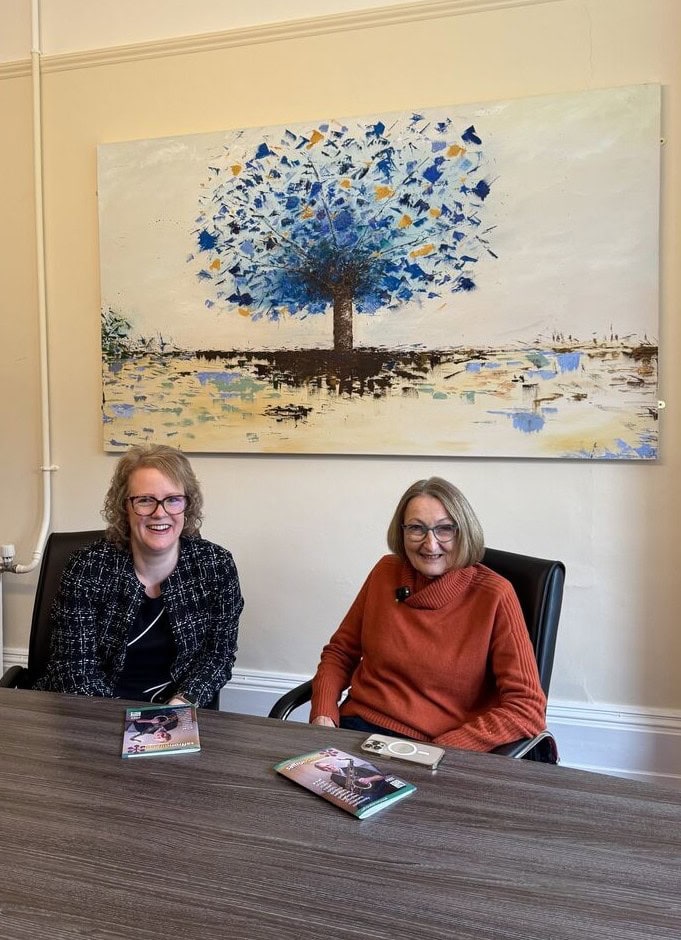
It was great to welcome Harriet Christodoulides from Saffron Directory to the Saffron Walden office this morning for an interview with our Managing Partner, Jennifer Carpenter, discussing why Adams Harrison choose to support the directory. Huge thanks to Harrison Cantel for video recording the interview.

The Employment Rights Act 2025 – What does this mean for you? FREE EVENT

We’re pleased to invite you to our upcoming FREE event “The Employment Rights Act 2025 — What This Mean for You”

Join us for an insightful session on the upcoming employment law changes at our FREE, in- person event.

Whether you’re a business owner, HR professional, or an employee looking to understand your rights, this session will provide you with practical insights.

We hope to see you there!

We will be at the Saffron Community Link, 1A Market Street, Saffron Walden, CB10 1HX, on the following dates:

Wednesday 25th February 5.15pm.
Tuesday 5th March 8.00am.

🔗 Secure your place here: Click Here

2025 Christmas Charity Cheque Presentation to Uttlesford Food Bank

Jack Stewart, Partner and Head of Residential Conveyancing, presented Katy Mendes-Day of Uttlesford Food Bank a cheque for £200 on Tuesday 16th December. Every Christmas, instead of sending Christmas cards to our clients and contacts, staff select a charity local to each office to receive a donation from the partners. For Saffron Walden office this year the chosen charity was Uttlesford Food Bank which operates in and around Saffron Walden. You can find out more about Uttlesford Food Bank here: https://uttlesford.foodbank.org.uk/

New Partner Announcement

Adams Harrison with offices in Saffron Walden, Haverhill and Sawston, are pleased to announce that Roslyn Sweeney has joined the partnership.
Roslyn qualified as a solicitor in 2003 and has worked in the Cambridge area for over 20 years, specialising in Residential Conveyancing. Roslyn joined the practice in 2024, based at the Sawston office and has been an integral part of our busy Residential Department. Prior to joining Adams Harrison Roslyn was a Partner at a Top 60 UK law firm. Prior to that, she co-founded and ran a successful law firm, having previously gained extensive experience at two other leading regional practices. This background has given her a deep understanding of the property market across Cambridge and the surrounding areas.

On joining the partnership Roslyn said “I’m proud to have been appointed a Partner at Adams Harrison. It’s a privilege to serve our local communities and I look forward to contributing to the continued excellence of our client service.”

Jennifer Carpenter, Managing Partner said “We are delighted to have a solicitor of Roslyn’s calibre join the partnership. I look forward to working more closely with Roslyn and the valuable contribution to the partnership I know she will bring”

Adams Harrison can be contacted at any of their three offices for assistance in with your residential conveyancing requirements.

2025 Christmas Charity Cheque Presentation to Arthur Rank Hospice Charity

Roslyn Sweeney, Partner and Residential Conveyancing Solicitor presented Sophie Marriage of Arthur Rank Hospice Charity a cheque for £200 on Monday 8th December. Every Christmas, instead of sending Christmas cards to our clients and contacts, staff select a charity local to each office to receive a donation. For Sawston office this year the chosen charity was Arthur Rank Hospice Charity.
You can find out more about Arthur Rank Hospice Charity here: https://www.arhc.org.uk/